Affiliate marketing has evolved significantly over the past decade. While many marketers focus their efforts on Google, YouTube, Instagram, and TikTok, one platform continues to offer exceptional opportunities with comparatively lower competition: Pinterest.
Often mistaken for a social media platform, Pinterest functions more like a visual search engine where users actively search for ideas, solutions, products, and recommendations. This search-driven behavior makes Pinterest an ideal platform for affiliate marketers looking to attract highly targeted traffic and generate consistent commissions.
Unlike traditional social platforms where content visibility declines within hours or days, Pinterest content has the potential to generate traffic for months or even years after publication. When combined with a strategic affiliate marketing approach, Pinterest can become a powerful source of passive income.
This comprehensive guide will walk you through the exact process of building a Pinterest affiliate marketing business—from selecting a profitable niche and creating engaging Pins to driving qualified traffic and maximizing affiliate revenue.
What Is Pinterest Affiliate Marketing?
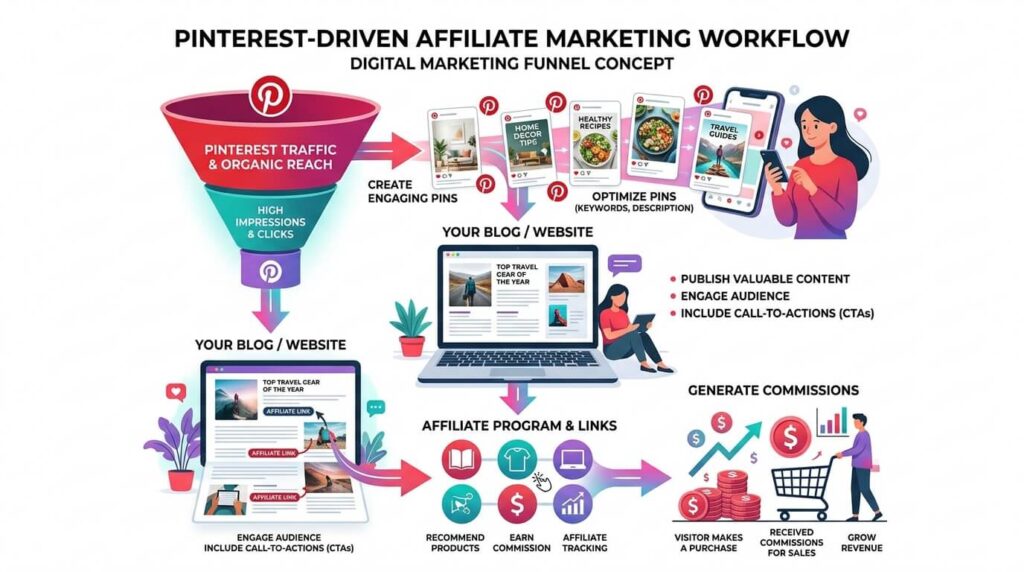
Pinterest affiliate marketing is a performance-based marketing strategy in which creators promote products or services through Pinterest and earn a commission whenever a user completes a purchase through their affiliate referral link.
The process typically follows a simple framework:
- Join relevant affiliate programs within your niche.
- Create optimized Pinterest content designed to attract clicks.
- Direct users to valuable content on your website or blog.
- Recommend products or services through affiliate links.
- Earn commissions when visitors take the desired action.
The true advantage of Pinterest lies in its longevity. A single well-optimized Pin can continue driving qualified traffic and generating commissions long after it has been published.
Why Pinterest Is an Ideal Platform for Affiliate Marketing
Pinterest offers several unique advantages that make it particularly effective for affiliate marketers.
High Purchase Intent
Pinterest users are actively searching for inspiration, solutions, and product recommendations. Unlike passive scrolling on social media, Pinterest users often arrive with a specific goal in mind, making them more likely to engage with relevant content and complete purchases.
Evergreen Traffic Potential
One of Pinterest’s most valuable characteristics is content longevity. While posts on most social platforms have a short lifespan, Pinterest Pins can remain discoverable in search results for months or even years, generating continuous traffic over time.
Free Organic Reach
Pinterest allows creators to gain significant visibility without relying solely on paid advertising. With proper keyword optimization and content strategy, businesses can attract substantial organic traffic at little to no cost.
Search Engine Functionality
Pinterest’s algorithm relies heavily on keywords and search intent. This makes search engine optimization (SEO) a critical component of success and allows creators to strategically target users based on their interests and buying behavior.
Lower Market Saturation
Compared to other digital marketing channels, Pinterest remains underutilized by many businesses and affiliate marketers. This presents an opportunity for creators to establish authority and gain visibility before competition intensifies.

Step 1: Create a Pinterest Business Account
A Pinterest Business Account serves as the foundation of your affiliate marketing strategy. It provides access to valuable tools and insights that are unavailable through personal accounts.
Key features include:
- Pinterest Analytics
- Audience Insights
- Pinterest Trends
- Rich Pins
- Advertising Tools
- Performance Tracking
How to Set Up a Business Account
- Visit Pinterest and select “Create a Business Account.”
- Complete your account registration.
- Provide your business information.
- Configure your profile settings.
- Access your Business Hub dashboard.
If you currently operate a personal Pinterest account, you can easily convert it into a business account while retaining your existing content.
Step 2: Select a Profitable Niche
Choosing the right niche is one of the most important decisions you will make as an affiliate marketer. Your niche determines your target audience, content strategy, affiliate partnerships, and earning potential.
Successful Pinterest niches often include:
- Personal Finance
- Home Decor
- Beauty and Skincare
- Fashion
- DIY and Crafts
- Health and Wellness
- Education
- Travel
- Parenting
- Online Business and Entrepreneurship
When evaluating a niche, consider three critical factors:
Audience Demand
Are people actively searching for information within the niche?
Affiliate Opportunities
Are there quality products or services available to promote?
Long-Term Interest
Can you consistently create valuable content around the topic?
The most sustainable affiliate businesses are built at the intersection of audience demand, monetization opportunities, and personal expertise.

Step 3: Conduct Market Research Using Pinterest Trends
Before creating content, it is essential to understand what users are actively searching for.
Pinterest Trends provides valuable insights into:
- Emerging search topics
- Seasonal trends
- Popular keywords
- Consumer interests
- Growth opportunities
By analyzing trend data, you can identify topics with strong demand and create content that aligns with current user behavior.
Successful Pinterest marketers consistently use trend research to stay ahead of audience interests and maximize content visibility.
Step 4: Analyze High-Performing Competitors
Competitive research provides valuable insight into what already works within your niche.
Examine leading Pinterest accounts and evaluate:
Pin Design
- Typography
- Color schemes
- Visual hierarchy
- Image selection
Content Structure
- How-to guides
- Listicles
- Tutorials
- Product comparisons
- Resource collections
Keyword Strategy
Pay close attention to the keywords used throughout:
- Profile names
- Board titles
- Pin titles
- Pin descriptions
Rather than copying competitors, use their success as inspiration to develop your own unique content strategy.
Step 5: Join Relevant Affiliate Programs
Once your niche has been defined, the next step is selecting affiliate programs that align with your audience’s interests and needs.
Popular affiliate networks include:
In addition, many brands operate independent affiliate programs that offer competitive commission structures.
Whenever possible, prioritize digital products and subscription-based services, as they frequently offer:
- Higher commission rates
- Recurring revenue opportunities
- Greater profit margins
- Higher customer lifetime value
Examples include software platforms, online courses, membership communities, and web-based services.
These products often generate substantially greater earnings than traditional physical products.

Final Thoughts:
Pinterest affiliate marketing remains one of the most overlooked opportunities in digital marketing today.
The platform combines the power of search intent, evergreen content, and affiliate marketing into a business model that beginners can start with minimal investment.
Focus on helping people, creating useful content, and building a trustworthy brand. Instead of chasing quick commissions, build a system that delivers value consistently.
With patience and consistent effort, Pinterest can become a powerful source of traffic, leads, and affiliate income for years to come.
FAQ:
Can I do affiliate marketing directly on Pinterest?
Yes, but sending traffic to a valuable blog post usually performs better and reduces platform-related risks.
Do I need a website?
Technically no, but having a website significantly improves trust, conversions, and long-term growth.
Is Pinterest affiliate marketing free?
Yes. You can start with a free Pinterest account and free design tools like Canva.
Which niches perform best on Pinterest?
Home decor, beauty, fashion, DIY, personal finance, education, and make-money-online niches tend to perform well.
How many Pins should I post daily?
Most successful Pinterest marketers publish between 5 and 20 Pins per day while maintaining quality.